Sparkling breakthrough: Diamonds could power super sensors
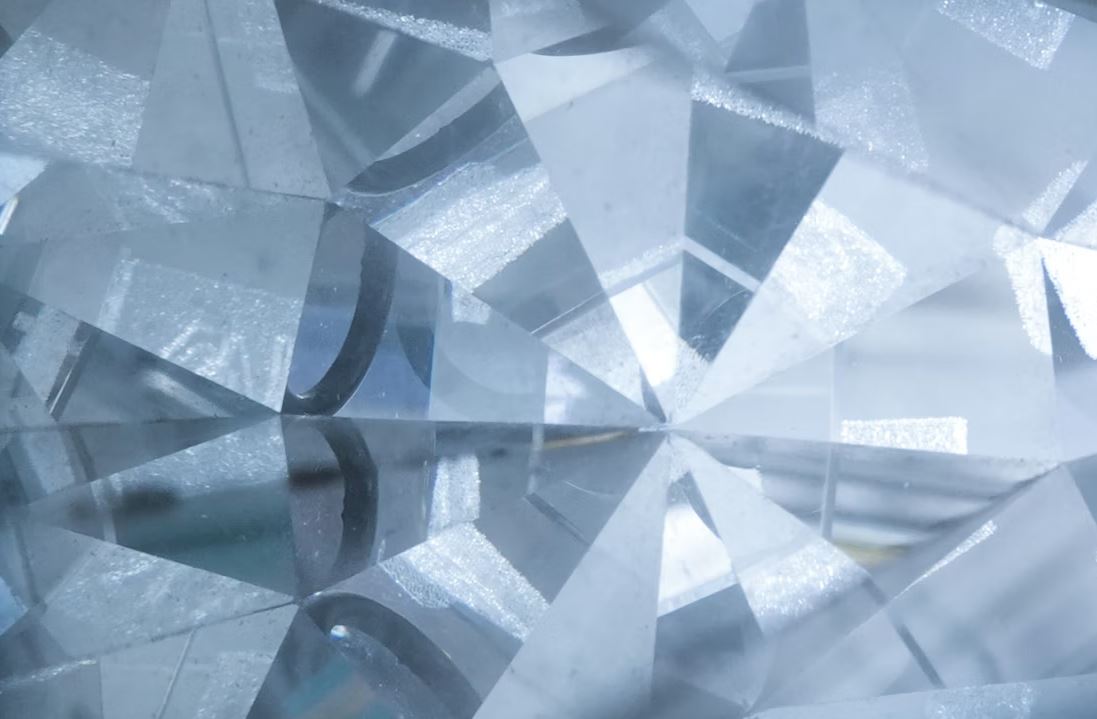
Quantum sensors could be about to get a whole lot more precise. Scientists have cracked a method to tweak tiny flaws inside diamonds, paving the way for super-sensitive devices. These new gadgets could detect changes in pressure and temperature like never before.
What's the big idea?
This groundbreaking research reveals a powerful new way to fine-tune quantum defects within diamonds. It's all about gently stretching or squeezing the crystal. These “color centers” in diamond are already vital for quantum tech, including ultra-sensitive sensors and new communication systems.
The silicon-vacancy (SiV) center is a superstar here, known for its super stable and bright light. An international team from Singapore University of Technology and Design (SUTD) and Yangzhou University, China, studied how these SiV centers react to being squashed or pulled.
Diamonds with a 'built-in ruler'
Using advanced computer models, the team explored how the defect's atomic structure and optical signals change under different mechanical conditions. And the results are pretty wild.
When compressed, the defect stays stable. But stretch it beyond a crucial 4% expansion, and something amazing happens: the defect totally transforms its structure.
This isn't just a cool party trick; it changes how the defect plays with light. The colour and intensity of the light it gives off change smoothly and predictably as the diamond is strained.
Professor Yunliang Yue from Yangzhou University explained: “These optical changes act like a built-in ruler. By simply measuring the light emitted from the defect, we can infer how much the material is being compressed or stretched.”
This makes SiV centers incredibly useful as nanoscale sensors. Because their light response varies continuously, they could monitor pressure or strain with astonishing sensitivity. We're talking individual nanostructures here!
More than just pretty light
The study also delved into the magnetic properties of these defects. Turns out, these also change systematically with deformation. This offers yet another way to sense things, making the system super versatile.
Crucially, the team now understands why these changes happen. When the diamond lattice expands or contracts, the electronic structure of the defect shifts. This, in turn, alters how it interacts with light and magnetic fields.
Assistant Professor Yee Sin Ang from SUTD highlighted the potential: “By showing how mechanical deformation can precisely control the quantum properties of silicon-vacancy centers, we open up new opportunities for designing multifunctional quantum sensors.”
These findings suggest SiV centers could be robust platforms for quantum sensing, especially in tricky environments like high-pressure physics or advanced materials. Think adaptive sensors that respond dynamically to their surroundings.
What's next for quantum tech?
Dr Shibo Fang, an SUTD Research Fellow, added: “What is particularly exciting is the predictability of the response. The defect behaves in a highly controllable way under strain, which is exactly what is required for reliable sensing technologies. Our study lays the groundwork for future experiments and device integration.”
The team is already looking ahead, believing that combining mechanical control with quantum defects could unlock even more amazing features in future quantum devices.
Related Content
MORE: Southend opens three new autism bases to boost inclusive education — https://trendwiremedia.com/2026/02/15/southend-opens-three-new-autism-bases-to-boost-inclusive-education/
MORE: Pregnant mum opens up about coping with son's challenging ADHD behaviour — https://trendwiremedia.com/2026/02/16/pregnant-mum-opens-up-about-coping-with-sons-challenging-adhd-behaviour/
MORE: New Safe Hub opens in Brixton to combat knife-enabled crime — https://trendwiremedia.com/2026/02/27/new-safe-hub-opens-in-brixton-to-combat-knife-enabled-crime/
OFFICIAL SOURCE VERIFICATION: This report is based on official data from University Newsroom. [Read the official report from University Newsroom](https://www.asiaresearchnews.com/node/22657)
Author



Subscribe for $2 every four weeks for the first six months
Subscribe for $20 every four weeks for the first six months