Tiny glowing ramps found on new computer chips could revolutionize your phone screen
KEY INFORMATION:
WHO: Henry Wen and a team of researchers from MIT, MITRE, Sandia National Laboratories, and the University of Arizona.
WHAT: A new class of photonic chips that use light instead of electricity to process and broadcast data.
WHERE: The Research Laboratory of Electronics (RLE) at MIT.
WHEN: 11 March 2026.
WHY: To bridge the gap between light trapped in on-chip wires and the outside world for use in AR glasses, 3D printing, and quantum computing.
A new photonic device efficiently beams light off a chip and into the world using tiny glowing ramps.
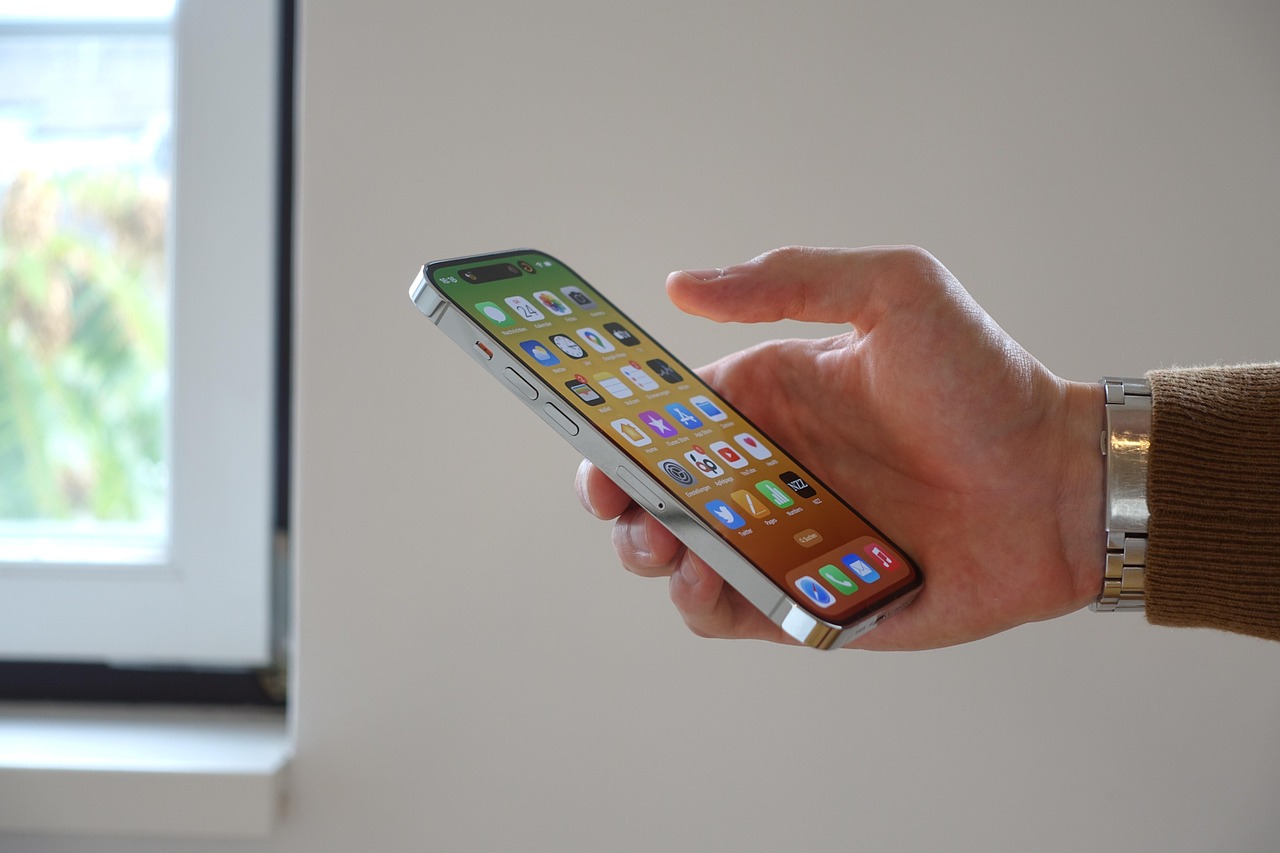
Imagine checking your phone on the morning commute and seeing a screen so sharp it looks like real life. Or wearing AR glasses that are as thin and light as your normal spectacles.
That future is one step closer thanks to geniuses at MIT. They have figured out how to get light to jump off a computer chip and into the air with total precision.
The microscopic glowing ski jump
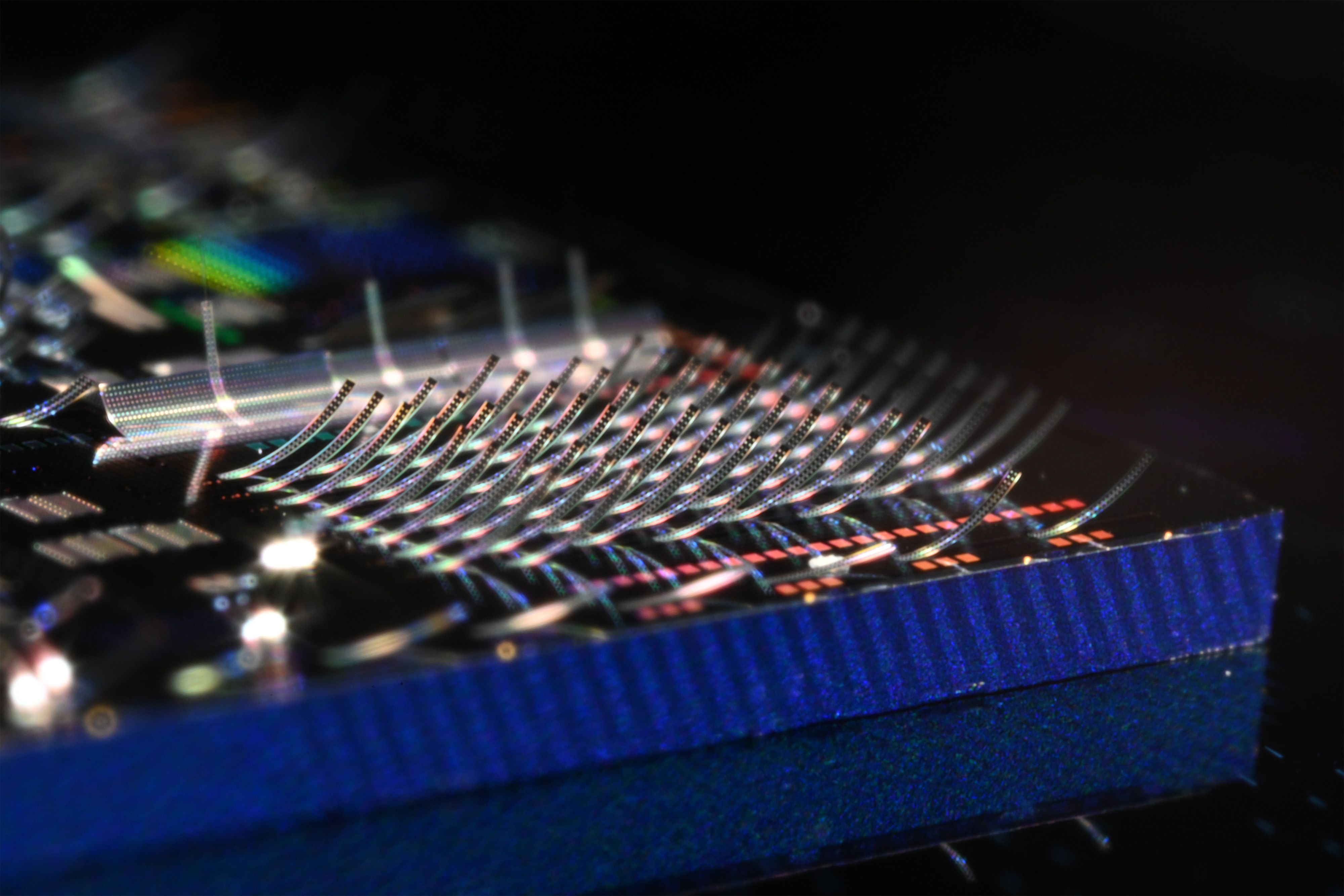
Standard computer chips usually keep light trapped inside tiny optical wires. But this new class of chip features thousands of microscopic structures that curl upward like tiny, glowing ski jumps.
These ramps allow the chip to shoot laser beams out into the world. Co-lead author Henry Wen said: "On a chip, light travels in wires, but in our normal, free-space world, light travels wherever it wants. Interfacing between these two worlds has long been a challenge."
To build these tiny ramps, the team had to get creative with their materials. They used two different substances, silicon nitride and aluminum nitride, which were previously separate technologies.
Each material expands and shrinks differently when it cools down from the high temperatures used in the factory. This creates a specific kind of strain that forces the structure to curl up, much like the coil in an old-fashioned thermostat.
Fit 30,000 pixels in a tiny space
The resolution of this new technology is truly mind-blowing. Researchers found they could fit 30,000 pixels into the same area that holds only two pixels in a standard smartphone display.
They even managed to project a detailed, full-color image that was roughly half the size of a grain of table salt. Because these pixels are at the physical limit of how small a pixel can be, the images are incredibly crisp.
Wen added: "Our platform is the ideal optical engine because our pixels are at the physical limit of how small a pixel can be." This stability is so high that the system does not even need to correct for errors to keep the image still.
From 3D printing to quantum power
This is not just about making your Netflix look better on the train. The technology could lead to 3D printers that work at lightning speed by using lasers to cure layers of resin.
It also has massive implications for the future of super-fast quantum computers. These futuristic machines need to control millions of tiny bits, called qubits, at once using light.
Wen explained the challenge of reaching so many points at once: "We can’t control a million laser beams, but we may need to control a million qubits. So, we needed something that can shoot laser beams into free space and scan them over a large area, kind of like firing a T-shirt gun into the crowd at a sports stadium."
Beyond computers, the method could be used to produce Lidar systems small enough to fit on tiny robots. This would allow them to navigate the world with the same precision as a self-driving car but in a much smaller package.
The team now plans to scale the system up to see if they can capture light from an array of these chips at once. They envision this opening the door to a new class of micro-opto-robotic agents that could change how we interact with technology forever.
Related Links:
MORE: MIT and Polytechnic University of Milan unveil AI method to enhance transparency in decision-making - https://trendwiremedia.com/2026/03/09/mit-and-polytechnic-university-of-milan-unveil-ai-method-to-enhance-transparency-in-decision-making/
MORE: Southampton students build world-first 'blockchain black box' to make autonomous drones unhackable - https://trendwiremedia.com/2026/03/07/southampton-students-build-world-first-blockchain-black-box-to-make-autonomous-drones-unhackable/
MORE: New £40 million AI Research Lab to Address Fundamental AI Challenges — https://trendwiremedia.com/2026/03/04/new-40-million-ai-research-lab-to-address-fundamental-ai-challenges/
MORE: New £40 million AI Research Lab to Address Fundamental AI Challenges — https://trendwiremedia.com/2026/03/04/new-40-million-ai-research-lab-to-address-fundamental-ai-challenges/
MORE: UK Space Agency backs space-made cancer drugs and tech — https://trendwiremedia.com/2026/02/09/uk-space-agency-backs-space-made-cancer-drugs-and-tech/
OFFICIAL SOURCE VERIFICATION: This report is based on official data from MIT. Document: **New photonic device efficiently beams light into free space Source Link: https://news.mit.edu/2026/new-photonic-device-efficiently-beams-light-free-space-0311
Author



Subscribe for $2 every four weeks for the first six months
Subscribe for $20 every four weeks for the first six months