Football headers could send 'pressure waves' to brain, new research reveals
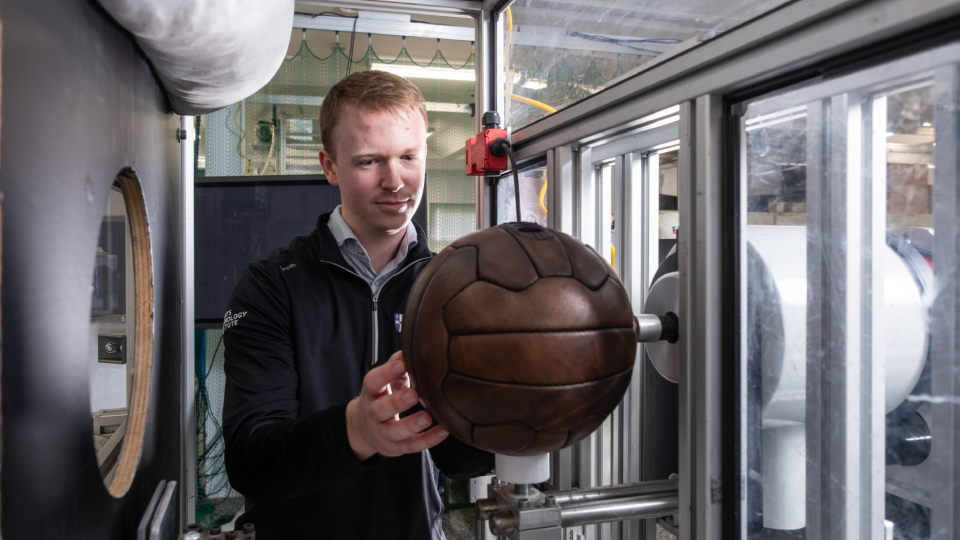
FOOTBALL HEADERS could be sending dangerous 'pressure waves' into players' brains, new research has revealed. This groundbreaking discovery could change how we understand long-term health risks in the world's most popular sport.
The Hidden Danger in Every Header
Scientists at Loughborough University, philanthropically funded by The Football Association, have identified a previously unreported mechanism: a distinct pressure wave transferring energy directly into the frontal region of the brain.
This finding could prove vital in understanding the mechanics of headers and informing future studies into player well-being, especially given links between repetitive headers and neurodegenerative diseases later in life.
Up to 55x Energy Shock
The study, which involved testing various footballs from the last century against an advanced surrogate head model, found huge differences in the impacts. The magnitude of this energy transfer varied by up to 55 times across historical and modern ball types.
Professor Andy Harland, Professor of Sports Technology at Loughborough University, said: "Having studied football impacts for two decades, I am pleased we have been able to find evidence of this pressure wave and quantify the energy that is being transferred into the brain during each header."
He added: "There is still much work to do before we fully understand what this means for brain health, but this research allows us to provide a much more detailed description of how energy is transferred during heading."
Dr Ieuan Phillips, the lead researcher, believes these findings offer a clear path forward. "These findings provide opportunities to work towards ball designs and testing specifications that minimise energy transfer into the brain," he said.
Charlotte Cowie, FA Chief Medical Officer, added: "This new independent research provides us with innovative and previously undiscovered insight – and it is part of our ongoing commitment to gain a greater understanding of this highly complex area."
What This Means for Football's Future
Researchers hope this new insight will help inform the development of new ball designs that will minimise pressure wave energy transfer. The study, published in the peer-reviewed Proceedings of the Institution of Mechanical Engineers: Journal of Sports Engineering and Technology, marks a crucial step.
However, it's important to note the study used laboratory-based surrogate models; therefore, it is not possible to derive any clinical implications for player health just yet. This research is a starting point for more vital investigation.
Related Content
MORE: £150 million investment announced for healthcare, energy, and materials research — https://trendwiremedia.com/2026/02/19/150-million-investment-announced-for-healthcare-energy-and-materials-research/
MORE: Britain builds world's biggest AI "brain" to unlock limitless energy — https://trendwiremedia.com/2026/03/23/britain-builds-worlds-biggest-ai-brain-to-unlock-limitless-energy/
MORE: From gripping true crime to high-concept horror: The best 90-minute films to stream this week — https://trendwiremedia.com/2026/02/07/from-gripping-true-crime-to-high-concept-horror-the-best-90-minute-films-to-stream-this-week/
OFFICIAL SOURCE VERIFICATION: This report is based on official data from University Newsroom. [Read the official report from University Newsroom](https://www.lboro.ac.uk/news-events/news/2026/april/pressure-wave-energy-in-football-heading/)
Author





Subscribe for $2 every four weeks for the first six months
Subscribe for $20 every four weeks for the first six months