Mini-brains get massive upgrade: Scientists make huge leap for drug testing
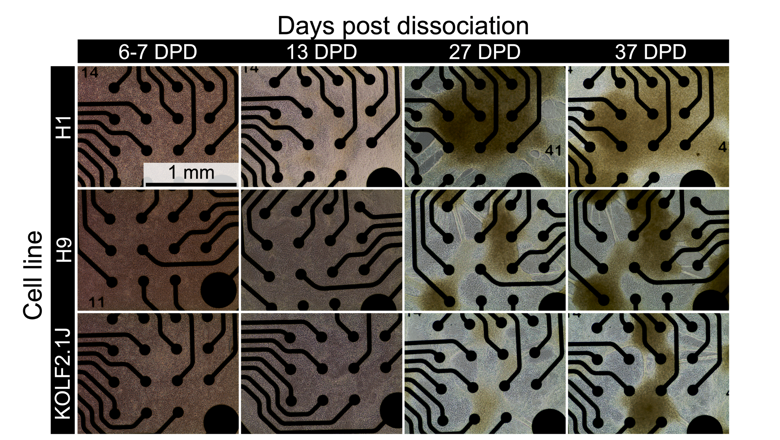
Groundbreaking news from King's College London! Scientists have made a huge leap forward. They developed a new system for brain organoids that could revolutionise drug testing and genetic research. This game-changing method tackles long-standing issues with how we study "mini-brains" in the lab.
The Big Idea
For ages, scientists faced a tricky balancing act with lab-grown neural networks. Traditional 3D brain organoids offer diverse cells, like a real brain. But they are hard to reproduce. It's also tough to record electrical activity from deep inside them.
On the flip side, 2D networks are easier to study over time. However, they lack the vital cell diversity found in their 3D cousins. This new King's College London research, published in Cell Reports Methods, offers the best of both worlds.
Professor Deepak Srivastava, Professor of Molecular Neuroscience, highlighted the impact. "Our approach makes it possible to follow neural network activity over time," he stated. "It will allow us and others to directly compare drug effects or gene variants across many parallel cultures."
How It Works
So, how did they do it? The team, including Dr Adam Pavlinek and Professor Anthony Vernon, first grew 3D organoids. Then, they cleverly broke them down into individual cells. This is a process called dissociation.
These varied cells were then mixed from different organoids. This ingenious step dramatically reduced variability. It averaged out differences between the original organoids. The cells were then grown on a 2D plate with electrodes. This is called a microelectrode array.
This setup meant researchers could watch neurons develop. They recorded electrical activity for much longer than before. Dr Adam Pavlinek, first author on the study, explained: "The neurons in organoids have a remarkable ability of self-assembling into networks. We think the balance of neuron cell types in these networks may affect their electrical activity. This may underlie the differences we see between networks."
Why It Matters
This isn't just a win for the lab bench. It has massive implications for future health. The system makes higher throughput drug testing possible. This means more drugs can be screened faster against brain tissue.
It also allows for deeper genetic research. They can investigate how specific mutations affect neural electrical activity. Scientists can now track neural network activity over extended periods. This provides crucial insights into brain development and disease.
Related Content
MORE: New auction powers to fill long-term empty shops on Lambeth high streets — https://trendwiremedia.com/2026/02/07/new-auction-powers-to-fill-long-term-empty-shops-on-lambeth-high-streets/
MORE: Freed From PS3 Prison: Fans Rejoice At Long-Awaited Metal Gear Solid 4 Port — https://trendwiremedia.com/2026/02/13/freed-from-ps3-prison-fans-rejoice-at-long-awaited-metal-gear-solid-4-port/
MORE: Telford & Wrekin Council restores 375 long-term empty homes, achieving target early — https://trendwiremedia.com/2026/03/10/telford-wrekin-council-restores-375-long-term-empty-homes-achieving-target-early/
OFFICIAL SOURCE VERIFICATION: This report is based on official data from University Newsroom. Document: [A long-term and scalable system to record from neural organoids | King's College London](https://www.kcl.ac.uk/news/a-long-term-and-scalable-system-to-record-from-neural-organoids) Source Link: https://www.kcl.ac.uk/news/a-long-term-and-scalable-system-to-record-from-neural-organoids
Author


Subscribe for $2 every four weeks for the first six months
Subscribe for $20 every four weeks for the first six months